Ethical supply chains build long-term business value by reducing operational risk, lowering compliance costs, strengthening supplier relationships, and meeting the growing consumer demand for transparency. Companies with strong ethical sourcing practices report better supplier retention, fewer disruptions, and — according to Deloitte research — the potential to outperform peers in market value by as much as 400%.
Why Ethics Is No Longer Optional
For decades, supply chains were built around one goal: move goods faster and cheaper than the competition. Globalization and just-in-time manufacturing rewarded speed above almost everything else. But that single-minded focus on cost quietly created hidden liabilities — unsafe factory conditions, environmental damage, and opaque sourcing networks that occasionally masked forced labor or corruption.
Today, the rules have changed. Businesses are no longer judged only on how fast they can deliver — they’re judged on how they deliver. Regulators, investors, and customers all want the same thing: proof that a company’s supply chain treats people and the planet responsibly.
This shift isn’t just a moral upgrade. It’s a business strategy. Companies that build ethical, transparent supply chains are finding that responsibility and profitability aren’t in conflict — they reinforce each other, as explored in this sourcing insights hub.
What Does an “Ethical Supply Chain” Actually Mean?
An ethical supply chain is one that integrates fair labor standards, environmental stewardship, anti-corruption practices, and regulatory compliance across every tier of production — not just the first layer of suppliers a company deals with directly.
It typically includes:
- Fair wages and safe working conditions for everyone in the production chain
- Environmental responsibility, including sustainable sourcing and waste reduction
- Transparency and traceability, so a product’s origin can be verified from raw material to shelf
- Anti-corruption safeguards and honest business conduct
- Third-party audits that hold claims accountable instead of relying on self-reported data
The key word here is verifiable. A supply chain isn’t ethical because a company says so — it’s ethical because it can be proven, tier by tier.
The Business Case: Why Ethics Pays Off
1. Consumers Are Willing to Pay More for It
This isn’t a fringe preference anymore. A PwC 2024 survey found that consumers are willing to pay an average premium of nearly 10% for sustainably sourced products. Among younger buyers, that number climbs even higher — recent industry surveys show that a majority of Gen Z shoppers say they’ll pay more for goods from brands with credible sustainability practices.
That means ethical sourcing isn’t just a cost center. It’s a pricing advantage.
2. It Reduces Risk — and Risk Is Expensive
Supply chain disruptions are brutally costly. Industry data puts the average disruption at well over a million dollars per day, with some sectors like oil, gas, and high-tech losing several million dollars daily during major outages.
Ethical supply chains are built on visibility — knowing exactly who your suppliers are, down to the raw material source. That visibility is exactly what prevents small problems (a labor violation, an environmental fine, a customs hold) from becoming full-blown operational crises. Companies with mapped, audited supply chains catch red flags before they become headlines.
3. It Protects Market Access
Regulation is catching up fast. Modern slavery and due diligence laws in the UK, the EU (CSRD, CS3D, EUDR), and Australia now require companies to report on forced labor risks and environmental impact across their supply chains. Large companies are required to report under some of these standards starting in 2026.
Businesses that already have traceability systems in place aren’t scrambling to comply — they’re simply exporting proof they’ve already collected. Ethical sourcing, in other words, has quietly become a market-access requirement, not just a brand value.
4. It Improves Supplier Relationships and Retention
Ethical supply chain programs aren’t just about policing suppliers — they’re about developing them. Programs that include supplier training, fair pricing, and long-term partnerships (rather than short-term, lowest-bid contracts) tend to build more loyal, more reliable supplier networks.
That loyalty shows up on the balance sheet: fewer supplier drop-offs, more consistent quality, and stronger negotiating relationships built on trust instead of leverage — a theme reflected in professional insights on global sourcing.
5. It Builds Brand Equity That Survives a Crisis
In the social media era, a single supply chain scandal can undo years of brand-building in days. Companies with genuine, documented ethical practices have a defense — receipts, audits, and traceability data — instead of a scramble to explain themselves after the fact.
Some research on trust and transparency in supply chains has found that companies seen as ethical and trustworthy can outperform less transparent peers in market value by a wide margin — a reminder that reputation, once quantified, is a real financial asset.
The Gap Between Intent and Execution
Here’s the uncomfortable truth: most companies want to be ethical, but few can prove it. Recent industry surveys show that the vast majority of procurement leaders say environmental and social factors matter in supplier decisions — yet a similar majority admit that finding genuinely sustainable suppliers is difficult.
Part of the problem is visibility. Most companies have strong insight into their direct (Tier 1) suppliers, but that visibility drops off sharply at Tier 2 and almost disappears at Tier 3 — exactly where labor and environmental risks are most likely to hide, at the farm, the mine, or the raw material processor.
This is where the real competitive opportunity lies. Companies willing to invest in deeper traceability — not just policies, but evidence — are the ones separating themselves from competitors who are still operating on promises alone.
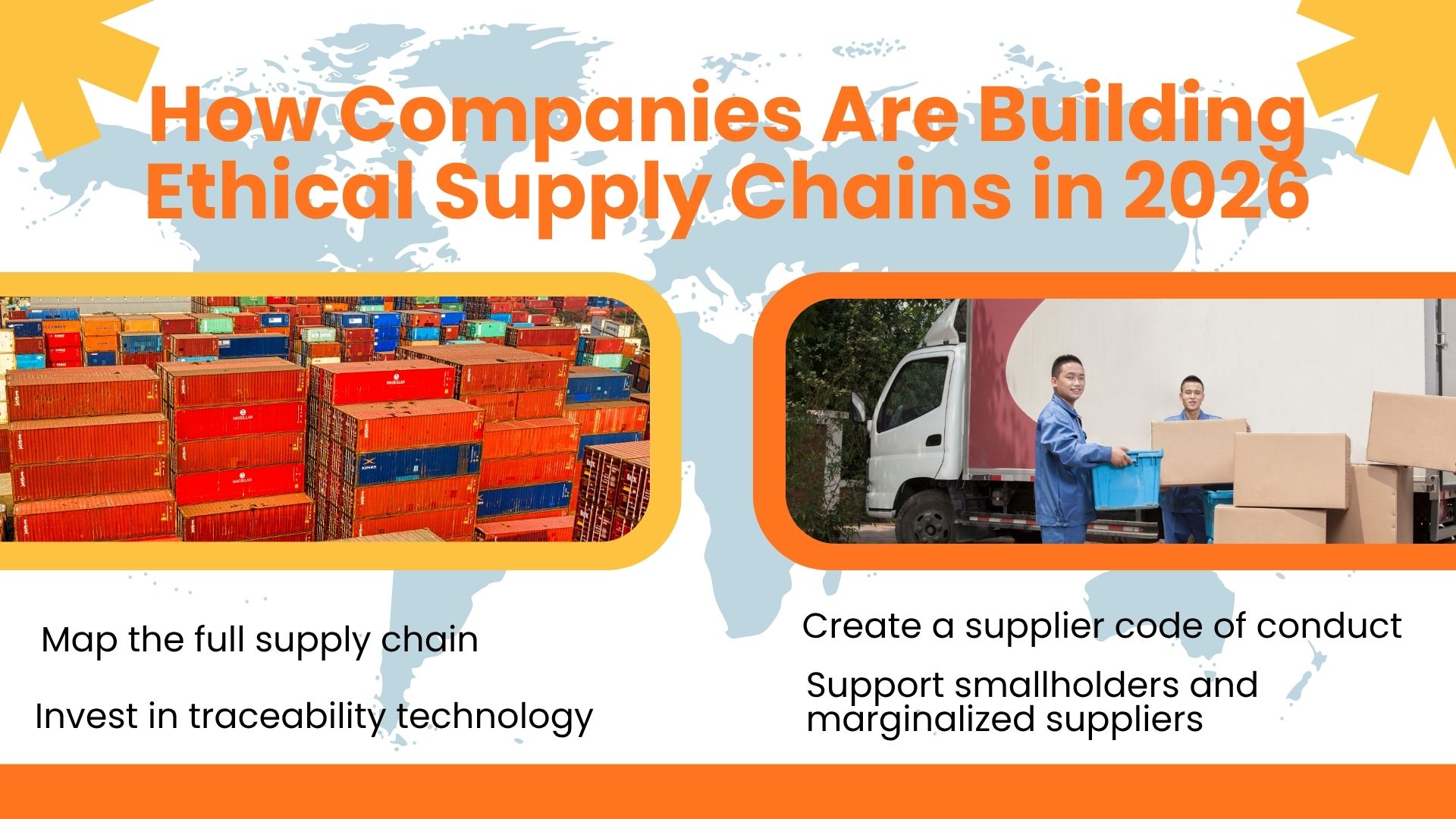
How Companies Are Building Ethical Supply Chains in 2026
The most effective ethical sourcing programs follow a similar pattern:
- Map the full supply chain — from Tier 1 all the way down to raw material origin, not just the suppliers a company deals with directly.
- Create a supplier code of conduct — clear, written standards covering labor, environment, and business ethics.
- Audit regularly, not just once — ethical sourcing is a continuous discipline, not a one-time certification.
- Invest in traceability technology — real-time data now matters more than paperwork, especially as regulators demand verifiable evidence rather than self-reported claims.
- Support smallholders and marginalized suppliers — not just large-scale vendors, but the small farmers and producers at the base of the chain.
- Tie incentives to outcomes — some companies are now linking executive compensation to ethical sourcing results, signaling that this isn’t a side initiative but a core business priority.
Frequently Asked Questions
Does ethical sourcing actually save money, or does it just cost more upfront? It often costs more upfront but saves significantly over time. Ethical sourcing reduces the risk of costly disruptions, compliance penalties, and reputational damage — expenses that tend to be far larger than the initial investment in audits and supplier development.
What’s the difference between “sustainable” and “ethical” sourcing? Sustainability usually refers to environmental impact — emissions, waste, resource use. Ethical sourcing is broader, covering labor rights, fair wages, anti-corruption, and human rights alongside environmental responsibility.
Why is supply chain visibility beyond Tier 1 suppliers so important? Most labor and environmental violations occur deeper in the supply chain — at the raw material or smallholder level — where companies historically have had little to no visibility. Without mapping these deeper tiers, ethical claims can’t be verified.
Are consumers really willing to pay more for ethical products? Yes. Multiple recent surveys confirm this, with willingness to pay a premium ranging from roughly 10% to significantly higher among younger demographics who prioritize sustainability in purchasing decisions.
What industries are under the most pressure to prove ethical sourcing? Fashion, food and agriculture, and electronics face particularly intense scrutiny, largely because their supply chains are long, complex, and historically opaque at the raw material level.
The Bottom Line
Ethical supply chains have moved from a “nice to have” to a genuine business strategy. The companies leading this shift aren’t doing it purely out of goodwill — they’re doing it because it reduces risk, protects market access, strengthens supplier relationships, and builds a brand reputation that can withstand scrutiny.
The businesses still treating ethics as a marketing checkbox are the ones most exposed when regulations tighten or a supply chain issue makes headlines. The ones building real traceability and supplier accountability today are the ones positioned to lead their industries tomorrow.
Learn more about the business behind this research on Crunchbase.
Sources
- PwC Consumer Survey, 2024
- Deloitte research on trust and supply chain performance
- QIMA Supply Chain Visibility Report, 2024
- International Labour Organization (ILO) estimates
- EcoVadis, “What is Supply Chain Sustainability,” 2026
- IntegrityNext, “Top Trends Shaping Supply Chain Sustainability,” 2026