Ethical Sourcing in International Trade has become one of the most important priorities for businesses operating in today’s global economy. International trade has evolved far beyond the movement of goods between countries. Today’s global marketplace is driven by complex supply chains, changing consumer expectations, environmental responsibility, and growing demands for transparency. Businesses are no longer evaluated only by the quality or affordability of their products. Increasingly, they are judged by how responsibly those products are sourced, manufactured, and delivered.
This shift has placed ethical sourcing at the center of modern international trade. Companies are recognizing that responsible sourcing is not simply a corporate responsibility initiative; it has become an essential business strategy that supports long-term growth, strengthens supply chains, and builds lasting customer trust.
As organizations expand across international markets, they face increasing pressure to understand where materials originate, how suppliers operate, and whether business practices align with ethical and environmental standards. Consumers, investors, and governments all expect greater accountability, making ethical sourcing one of the defining trends shaping global commerce today.
Understanding Ethical Sourcing
Ethical sourcing refers to the process of selecting suppliers and business partners based on responsible business practices rather than focusing only on price or production capacity. It considers labor conditions, environmental impact, workplace safety, legal compliance, and transparency throughout the supply chain.
Businesses adopting ethical sourcing aim to ensure that products are created under fair working conditions while minimizing environmental harm. This approach also encourages long-term partnerships built on trust, accountability, and mutual benefit.
Unlike traditional procurement strategies that often prioritize immediate cost savings, ethical sourcing evaluates the broader impact of business decisions. Organizations understand that responsible sourcing creates value not only for suppliers but also for customers, employees, investors, and local communities.
Why Ethical Sourcing Has Become a Business Priority
Several factors have accelerated the importance of ethical sourcing over the past decade. Consumers have become significantly more informed. Access to digital information allows people to learn about manufacturing practices, labor standards, and environmental issues before making purchasing decisions. Many customers actively support businesses that demonstrate responsible operations and avoid companies associated with unethical practices.
Investor expectations have also changed. Environmental, Social, and Governance (ESG) considerations now influence investment decisions across many industries. Investors increasingly evaluate how organizations manage supplier relationships, environmental risks, and corporate governance before committing capital.
Government regulations have become more demanding as well. Many countries now require greater transparency regarding supply chains, encouraging organizations to verify sourcing practices and ensure compliance with international standards. These developments have transformed ethical sourcing from a voluntary initiative into an important element of competitive business strategy.
The Connection Between Ethical Sourcing and International Trade
International trade depends on cooperation among manufacturers, suppliers, logistics providers, distributors, and retailers located across different countries. Because supply chains have become increasingly interconnected, decisions made in one region often influence operations throughout the entire network. Ethical sourcing improves these relationships by creating shared expectations regarding quality, responsibility, and transparency.
When suppliers understand that buyers value long-term partnerships rather than simply the lowest price, they become more willing to invest in improving operations, maintaining quality standards, and adopting sustainable business practices.
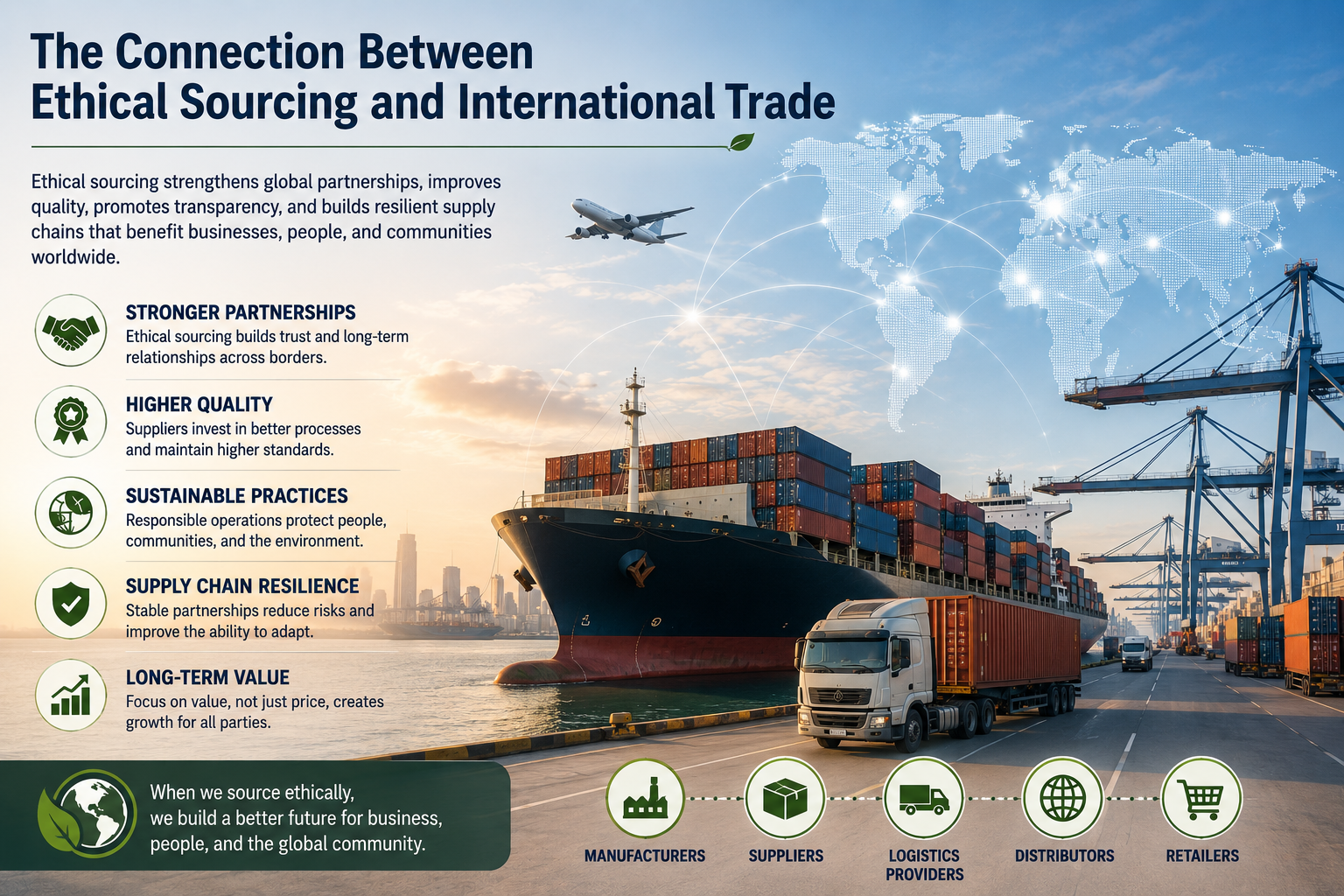
This collaborative approach strengthens supply chain resilience while reducing operational uncertainty. Instead of constantly changing suppliers to reduce short-term costs, organizations build dependable relationships capable of adapting to changing market conditions.
Building Trust Across Global Supply Chains
Trust remains one of the most valuable assets within international business. Organizations working across multiple countries often face differences in regulations, cultures, business practices, and communication styles. Without trust, these differences can create misunderstandings, delays, and increased operational costs.
Ethical sourcing encourages open communication and accountability between business partners. Companies that maintain transparent relationships with suppliers often resolve challenges more efficiently because both parties understand shared objectives and responsibilities.
Trust also reduces the need for excessive oversight. Businesses become more confident in supplier performance, allowing management teams to focus on innovation, customer service, and strategic growth instead of continuously monitoring operational risks. Over time, this confidence contributes to stronger partnerships capable of supporting sustainable expansion into international markets.
Transparency Creates Competitive Advantage
Transparency has become one of the defining characteristics of successful international businesses. Customers increasingly expect organizations to provide information about sourcing practices, manufacturing processes, and environmental responsibility. They want confidence that products have been produced ethically while meeting quality expectations. Businesses that embrace transparency often experience stronger customer loyalty because openness builds credibility. Transparency also improves internal decision-making.
When organizations have greater visibility across their supply chains, they can identify risks earlier, monitor supplier performance more effectively, and respond quickly to unexpected disruptions. Rather than treating transparency as an administrative requirement, leading companies view it as a strategic advantage that supports better collaboration, improved planning, and stronger business relationships.
Sustainability Is Changing Global Trade
Sustainability and ethical sourcing are closely connected because both encourage responsible long-term decision-making. Businesses increasingly recognize that environmental responsibility supports operational efficiency while strengthening relationships with customers and investors.
Reducing waste, improving resource management, selecting responsible suppliers, and supporting environmentally friendly production methods all contribute to more sustainable international trade. Companies that integrate sustainability into sourcing decisions frequently discover additional business benefits beyond environmental improvements.
Responsible operations often improve brand reputation, reduce supply chain risks, strengthen customer loyalty, and create opportunities for innovation. These advantages demonstrate that sustainability has become a practical business strategy rather than simply a social responsibility initiative.
Technology Is Supporting Responsible Sourcing
Modern technology has transformed how businesses manage international supply chains. Digital tracking systems, cloud-based supplier management platforms, artificial intelligence, and blockchain technologies provide organizations with greater visibility than ever before. Businesses can now monitor shipments in real time, verify supplier certifications, analyze sourcing data, and identify potential compliance issues before they become major problems.
Technology also improves communication between suppliers and buyers, allowing faster decision-making and better coordination across international operations. However, technology alone cannot guarantee ethical sourcing. The most successful organizations combine digital innovation with strong leadership, responsible governance, and trusted business relationships. These elements work together to create supply chains that are both efficient and resilient.
Leadership Plays a Critical Role in Ethical Sourcing
Ethical sourcing does not happen by chance. It begins with leadership that understands the importance of responsible decision-making and long-term planning. Business leaders influence every stage of the supply chain, from selecting suppliers to setting company policies and maintaining quality standards.
Organizations with strong leadership are more likely to establish clear sourcing guidelines, regularly evaluate supplier performance, and encourage open communication throughout the procurement process. Rather than making decisions based solely on immediate financial returns, successful leaders consider the long-term impact of every business relationship.
This approach also creates a culture of accountability within the organization. Employees become more aware of the importance of responsible sourcing, ethical conduct, and transparent communication. When these values become part of everyday business operations, they strengthen relationships with suppliers while improving customer confidence.
Leadership also encourages continuous improvement. Global markets change rapidly, and businesses that regularly review their sourcing strategies are better prepared to adapt to new regulations, emerging technologies, and changing consumer expectations.
Managing Risk Through Responsible Partnerships
Every international supply chain faces some level of risk. Transportation delays, political uncertainty, economic fluctuations, natural disasters, and changing regulations can all disrupt business operations.
Ethical sourcing helps reduce many of these risks because organizations build stronger, more reliable partnerships over time. Instead of constantly changing suppliers to reduce costs, companies invest in relationships with partners who consistently demonstrate quality, transparency, and responsible business practices.
Reliable suppliers are often more willing to communicate openly during difficult situations. They work collaboratively with buyers to solve problems rather than simply meeting contractual obligations. This level of cooperation allows businesses to respond more quickly to unexpected challenges while minimizing disruptions.
Risk management also becomes more effective because companies gain greater visibility into supplier operations. Regular assessments, ongoing communication, and responsible sourcing standards allow organizations to identify potential issues before they become major operational problems.
Businesses that combine ethical sourcing with proactive risk management often develop supply chains that are more resilient, flexible, and capable of supporting long-term international growth.
Customer Expectations Continue to Evolve
Modern consumers have changed the way businesses think about sourcing and production. Purchasing decisions are no longer based only on product quality or price. Customers increasingly want to know how products are made, where materials originate, and whether businesses operate responsibly.
Social media and digital communication have made supply chains more visible than ever before. Companies that fail to meet ethical expectations can quickly face reputational challenges, while organizations demonstrating responsible sourcing often earn greater customer trust and loyalty.
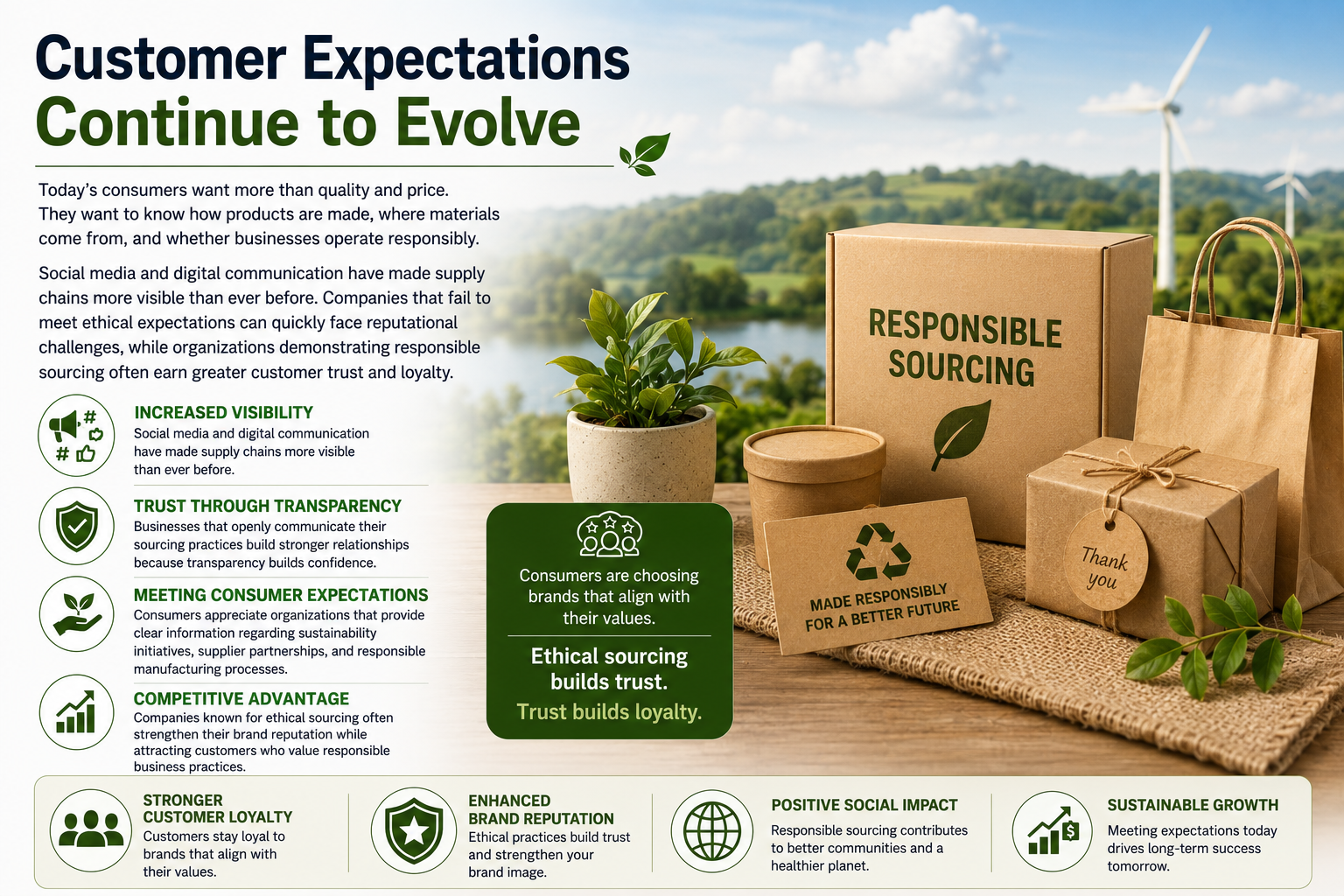
Businesses that openly communicate their sourcing practices create stronger relationships with customers because transparency builds confidence. Consumers appreciate organizations that provide clear information regarding sustainability initiatives, supplier partnerships, and responsible manufacturing processes.
Meeting these expectations also creates competitive advantages. Companies known for ethical sourcing often strengthen their brand reputation while attracting customers who value responsible business practices.
Innovation Supports Sustainable Trade
Innovation has become an essential part of ethical sourcing. Businesses continuously develop new technologies and operational strategies that improve efficiency while supporting responsible business practices.
Artificial intelligence helps organizations analyze supplier performance more effectively. Blockchain technology increases transparency by allowing businesses to verify sourcing information throughout the supply chain. Digital collaboration platforms improve communication between suppliers located in different regions of the world.
Innovation also supports sustainability. Smarter logistics systems reduce fuel consumption, advanced manufacturing processes minimize waste, and data analytics help companies optimize inventory management while reducing unnecessary resource use.
Organizations that combine innovation with responsible sourcing create stronger competitive positions because they improve operational performance while meeting growing customer expectations regarding sustainability and transparency.
Preparing for the Future of International Trade
Technological innovation, changing regulations, stronger environmental commitments, and evolving consumer expectations will continue to shape the future of international trade, encouraging businesses to become more transparent, resilient, and responsible. Businesses that prepare today by investing in ethical sourcing will likely be better positioned for long-term success. Rather than reacting to new expectations after they emerge, forward-thinking organizations are already strengthening supplier relationships, improving transparency, and adopting sustainable business practices.
International markets will continue becoming more interconnected. Companies capable of maintaining responsible partnerships across multiple countries will have greater flexibility to adapt during periods of uncertainty while continuing to serve customers effectively.
Future business success will depend not only on operational efficiency but also on trust, collaboration, and responsible leadership. Organizations that understand this broader perspective are building supply chains designed to remain competitive for many years rather than focusing exclusively on short-term financial performance.
Frequently Asked Questions
What is ethical sourcing in international trade?
Ethical sourcing is the process of selecting suppliers and business partners based on responsible labor practices, environmental standards, transparency, legal compliance, and sustainable business operations rather than focusing only on cost.
Why is ethical sourcing important?
Ethical sourcing strengthens supply chains, improves customer trust, reduces operational risks, supports sustainability, and helps businesses build long-term partnerships that contribute to lasting growth.
How does ethical sourcing improve international trade?
It encourages transparency, stronger supplier relationships, responsible manufacturing, improved compliance, and greater resilience across global supply chains.
What challenges do companies face when implementing ethical sourcing?
Businesses may face challenges such as verifying supplier practices, maintaining transparency across multiple countries, adapting to changing regulations, and balancing responsible sourcing with operational efficiency.
Is ethical sourcing only for large companies?
No. Organizations of every size can benefit from ethical sourcing by building trusted supplier relationships, improving transparency, and strengthening long-term business performance.
Conclusion
Ethical sourcing has become one of the defining forces shaping modern international trade. As businesses expand across increasingly complex global markets, responsible sourcing provides a practical framework for building stronger supplier relationships, improving transparency, reducing operational risks, and creating sustainable long-term growth.
Organizations that embrace ethical sourcing recognize that successful business extends beyond financial performance. Trust, accountability, collaboration, and environmental responsibility now play equally important roles in determining long-term competitiveness.
Technology will continue transforming supply chains, regulations will continue evolving, and customer expectations will continue rising. Throughout these changes, ethical sourcing will remain an essential business strategy because it creates resilience while strengthening every relationship within the supply chain.
Businesses that invest in responsible partnerships today are building the foundation for future success. By combining innovation with transparency and long-term thinking, they are creating international trade networks that deliver value not only for companies but also for customers, suppliers, communities, and the global economy. Organizations looking to learn more about ethical sourcing and international trade can explore additional insights and industry perspectives that highlight the importance of responsible business practices.